Friday, November 6, 2009

Making Oatmeal More Convenient with Japanese Technology

[In honor of Winter, here is a repeat of previous cold weather suggestions]

Oatmeal is known to reduce cholesterol, a factor in many LS/LF diets. As the parent website says, there are several types of oatmeal available in the US. My favorite is steel cut oatmeal because it is not as cutup as other types and has more texture. The downside is that it takes about 30 minutes to cook - after the water boils!

Fortunately, Japanese technology to the rescue. Now the Japanese are not big oatmeal eaters, but they generally have rice with breakfast (and most other meals). Since rice takes about as long as oatmeal to cook and since they like to sleep as much as other people they invented rice cookers with automatic timers that can be loaded at night and produce a cooked breakfast dish. (One wonders if this was then the inspiration for breadmakers too.)

I have lived in Japan and there people would not thnk of using their rice cooker for any other dish. But the manufacturers that sell in the US are more flexible since people are more likely to buy appliances with multiple uses. thus they give you rice cooker recipes for oatmeal and even broccoli sometimes! Zojirushi gives the following recipe for making oatmeal in their rice cookers:
(Cooked in a 5 cup Zojirushi Rice Cooker)

Ingredients: Serves 4
1 cup steel cut oats; 3 cups water; 1 cup half & half( Clearly not for a LS/LF diet - substitute skim milt or omit.) ; 3-4 Tbsp brown sugar
[Note: The cups involved are not US cups, but the Japanese size which is 3/4 of a US cup]


1. Place steel cut oats and water in the inner cooking pan.

2. Place the inner cooking pan in the main body of the rice cooker, plug in the unit, select the “Porridge” setting and push the “Cooking” button to start

3. When the rice cooker turns to “Keep Warm,” open the lid, stir and add the remaining ingredients.
Using the Timer function and soaking the oats overnight will help soften the texture. Please do not use the Timer function when cooking with milk or other dairy products, as they may spoil.

If your rice cooker does not have a porridge setting, please watch the rice cooker while it cooks, as it may overflow.
If you click on Customer Reviews for the Zojirushi NS-TGC10 in the Amazon ad below, you will see several customers use if for making oatmeal and suggest 2 1/2 cups of water instead of the 3 given above.

I have the more expensive NP-HBC10 Induction Heating model and can vouch that it works great for oatmeal. IH heats the whole inner pot evenly so whatever is cooked is unlikely to burn or scorch. Load it with water and oatmeal before going to bed and set the timer on it for our normal breakfast time. The oatmeal is ready when I want it!


Friday, October 30, 2009

"Smart Choices" Exits Stage Left


In a February 2009 post we talked about nutrition labeling programs called "Heart Check", "Health Check", and "Smartspot"/"Smart Choices Made Easy". I apparently missed the "Smart Choices" program, but no long term loss as it has now been discontinued in controversy.

The Washington Post reported on October 29

The Smart Choices Program, launched in August, deemed Froot Loops nutritious enough to sport a big checkmark on the front of boxes signifying that choosing the cereal was indeed smart. The news media and consumer advocacy groups had a field day with that one, and the U.S. Food and Drug Administration vowed to protect the public against any misconceptions caused by the labeling system.

Things came to a head Friday, when Smart Choices announced it would cease activity and pledged to work with the FDA to develop a universal system for posting nutrition information on the front of food packages.

It is not clear if the "Smart choices made easy" program of Pepsi is still around, although the website indicates no change. This program has improved since the first mention in February in that they now give criteria for selecting foods to be endorsed.

But I would like to remind all these groups about what Dietary Guidelines for Americans 2005 says about "Individuals with hypertension, blacks, and middle-aged and older adults." Now I don't have precise demographic and epidemiological data on the US population, but I am fairly certain that these 4 groups comprise 30+% of the US population. (Any readers have a firmer estimate?) And HHS and USDA conclude in Dietary Guidelines for Americans 2005 that these 4 groups should

" Aim to consume no more than 1,500 mg of sodium per day"

So how many 480 mg servings from foods with such health labels can you eat each day and still stay under 1500 mg?

Saturday, October 17, 2009

Campbell's Tries to Address LS/LF Market

Campbell's Healthy Request Soups: Progress in Marketing LS/LF Products


Campbell's has reorganized their soup offerings and at least is making an attempt to market soups that are low in both salt and fat. This is a remarkable step for a major grocery manufacturer, although niche firms like Hain's have been doing it for a long time.

The "Healthy Request" products "are 98% fat free, contain up to 50% less sodium than our regular soups and are made with high quality ingredients." Now 50% of a high number can still be rather high and none of these products can legally be labeled "low salt". These products meet the AHA heart check standards, as shown by the red logo above, and the stricter Canadian Health Check standards. However, most have 410 mg of sodium - lower than a lot of mainstream products but depending on you sodium daily goal it could cause a real problem. As a reminder, HHS and USDA joint Dietary Guidelines for Americans 2005 states:

KEY RECOMMENDATIONS

  • Consume less than 2,300 mg (approximately 1 tsp of salt) of sodium per day.
  • Choose and prepare foods with little salt. At the same time, consume potassium-rich foods, such as fruits and vegetables.

Key Recommendations for Specific Population Groups

  • Individuals with hypertension, blacks, and middle-aged and older adults. Aim to consume no more than 1,500 mg of sodium per day, and meet the potassium recommendation (4,700 mg/day) with food.
Thus, if your medical team advocates a 1,500 mg of sodium/day goal, there aren't a lot of 410 mg servings you can eat. Indeed, one serving of Healthy Request soup gives you an allowance for the rest of the day of 1,500 - 410 = 1,090 mg. Note that HHS and USDA recommend such goals not only for a tiny demographic group with esoteric medical conditions, but for "(i)ndividuals with hypertension, blacks, and middle-aged and older adults". These add up to a significant fraction of the US population.
US age distribution in 2000 (CRS Report)


Now Campbell's does offer 6 low sodium soups. See how many you actually find in a mainstream store! Why? Grocery suppliers like Campbell's pay stores "slotting fees" or slotting allowances" to guarantee specific items are on the shelf in your neighborhood stores. Thus Campbell's selects what products to push. Note also the 'low sodium" logo Campbell's uses as shown above. It says "for sodium restricted diets" as if it were dangerous for anyone else.

So thanks Campbell's for addressing both salt and fat in a mainstream product. But let's see if you can get the salt down to a more reasonable level.

And before you send the form letter that says this is what people really want, remember that people really preferred Coca-Cola with cocaine and 7-Up with lithium until they were taken off the market. Cocaine probably makes the Coke experience much better just like salt makes Campbell's soups taste better. But that is not what responsible producers do.

Friday, September 25, 2009

The Art of Dining Out

This is the best discussion I have found on this topic for those on LS/LF diets. It is from from SaltWatcher.com - a Web-based retailer of low salt foods. It is reprinted below with their kind permission. (Note the focus here is low salt, not LS/LF so some fine tuning may be needed.)


Being on a low sodium diet does not mean you have to give up the enjoyment of
eating out. It does however mean you need to prepare and be selective in your
choice of restaurants and menu items. Things to remember when dining out:


  • IF YOU ARE PLANNING ON EATING OUT, MAKE YOUR OTHER MEALS THAT DAY VERY LOW IN SODIUM. Any meal you eat out will most likely have more sodium than you would normally have at home. To compensate for that reality, be sure that the other meals you have that day are very low in sodium. Planning ahead can allow you to remain within your daily sodium restriction.

  • IF POSSIBLE, CALL THE RESTURANT AHEAD OF TIME TO BE SURE THEY ARE WILLING TO PREPARE YOUR MEAL WITHOUT ANY MONOSODIUM GLUTAMATE (MSG), SALT OR SAUCES. If they are reluctant or indicate it depends on how busy the chef is, select another restaurant. If the restaurant is willing to prepare a special meal for you, ask if you need to bring any special condiments, i.e.: seasonings, unsalted butter, low sodium sauce, low sodium salad dressings, etc. If you are unable to call ahead, ask about the feasibility of making a special meal before you are seated. It is better to know before you are seated, so you can decide if you will remain or go to another restaurant.

  • WHEN AT THE RESTAURANT EXPLAIN TO THE WAITER/WAITRESS THAT YOU ARE ON A LOW SALT DIET and ask that they or the chef recommend which of their menu items are the lowest in salt content and without MSG. Do not always assume “heart healthy” on a menu translates to low salt. It typically means the item is low in fats and cholesterol, if you are lucky these items will also be low in sodium.

  • CHECK OUT THE SERVING SIZE: Many restaurants often provide larger portions than necessary. If you are at a restaurant known for its large meals, request that half of the serving be placed in a take home box for a left over meal the next day. Although you may be tempted to eat more, stay within your normal portion size, remember the larger the portion, the higher the sodium.

  • CHOOSE FOODS THAT REQUIRE MINIMAL PREPERATION such as baked, and roasted. Avoid foods that are made with breading, batters, marinades or laden with sauce.

  • WHEN ORDERING, DON’T ASSUME THEY REMEMBER, AGAIN ASK THAT YOUR MEAL BE MADE WITHOUT ANY MSG, ADDED SALT OR SALTED BUTTER. Many restaurants today have unsalted butter available in their kitchen, ask that this be used.

  • CHOOSE FRESH FRUITS AND VEGETABLES when available.

  • CARRY YOUR OWN SALT FREE CONDIMENTS. When you know you will be eating out, go to a “Dollar Type Store” and purchase several small cosmetic/toiletry travel storage containers and depending on the type of restaurant, fill containers with single servings of your favorite low sodium salad dressing, low sodium ketchup/mustard/mayo, sauce, seasoning and unsalted butter, etc

  • WATCH THE SALAD BAR as many salad bars are enriched with sodium nitrate to help preserve their freshness. Ask if a preservative is used on the salad bar. Where possible, request that you have your salad prepared fresh and use vinegar and oil or lemon and oil as your dressing or use the low sodium version you brought with you

  • .
  • DESSERTS ARE NOT OFF LIMITS you just need to be selective. You are celebrating by eating out so enjoy some dessert. However, skip the pies, pastries, cakes and tortes, instead select sherbet and fresh fruits.

  • VISIT www.lowsaltfoods.com for additional advice on eating out and specific sodium information on fast foods.

  • ENJOY THE MEAL YOU AND/OR YOUR LOVED ONE DID NOT HAVE TO COOK!! If you find a restaurant that has graciously prepared good tasting, low sodium meals for you, please email me at info@SaltWatcher.com. Provide the restaurant name, address and phone number, if possible. I will contact the restaurant and if they are agreeable will post here as a dining out resource.
  • Tuesday, September 22, 2009

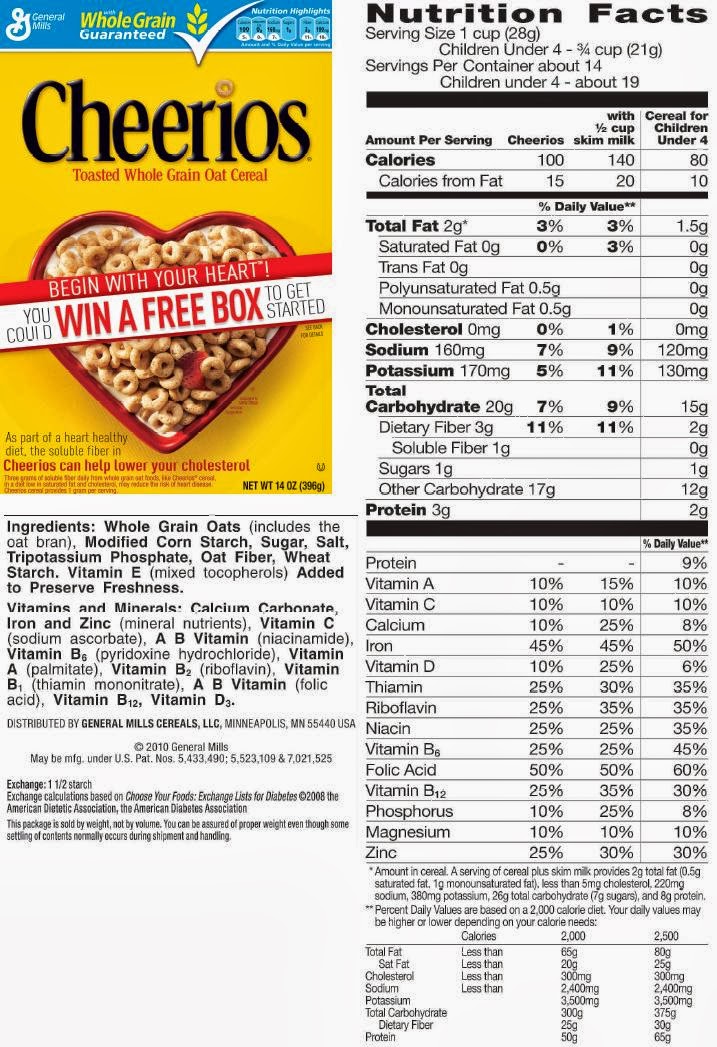
    Fed Up with Cheerio's Nutrition Hype and High Sodium? A Low Sodium Alternative


    Cheerios pushes its health claims so much that they are in trouble with FDA. While the oats in Cheerios may actually reduce cholesterol level, the sodium in the multiple servings of the product necessary to do so may have other consequences if you are on a LS/LF diet.

    General Mills: Did you ever wonder why Caduet is advertised on prime time television? It is because a significant fraction of Americans with high cholesterol also have high blood pressure, not to mention other conditions that require a low sodium diet. Multiple servings/day of Cheerios with 190 mg of sodium per serving is not what they need to address their
    cholesterol issues. (Note 190 mg. is computed based on a 1 cup serving, which may be unrealistic even if you are not trying to eat the amount necessary to lower cholesterol.)


    Fortunately, there are other options. One is Nature's Path Heritage O's a product high in oat flour and low in sodium. It is a little crisper than Cheerios, doesn't get as soggy, and has somewhat squarer edges. It is not found in many mainstream box stores, but is common in health food stores.

    A Canadian newspaper took General Mills to task for the high sodium content. They actually got a partial answer from the Canadian Division:

    Yesterday, I wrote about how Cheerios had a surprisingly high amount of salt in them -- raising concerns that they may not be the ideal baby snack many parents think they are. Before writing the post, I emailed the media relations department of General Mills -- which manufacturers Cheerios -- with a series of questions:

    Why is the salt content of Cheerios so high compared to some other cold cereals (like Frosted Mini Wheats)?

    Is your company looking at reducing the salt content of Cheerios?

    Does General Mills believe that, given its high salt content, that Cheerios are a suitable snack for infants and toddlers? As a breakfast cereal for young children?

    Are there any products similar to Cheerios that General Mills produces that are lower in sodium and may be more appropriate as a snack/food for children and toddlers?

    While I didn't get the detailed, point-by-point response I was hoping for, I did get the following email message back yesterday from Pierrette Buklis, a dietician with General Mills Canada:

    Cheerios makes a positive contribution to a healthy, balanced diet for Canadian children. Cheerios is whole grain, a source of fibre - particularly soluble fibre from oats - and provides a nutritionally significant amount of 8 essential nutrients. General Mills strives to have sodium levels as low as possible while meeting consumer taste expectations and we continue to explore every opportunity to cut or replace sodium without compromising flavour and other functions it plays in a healthy diet. Cheerios is the complete package – it offers good nutritional value, it’s convenient and it can help to build a healthy breakfast habit.

    Thank you for your interest!

    Well, taste Heritage O's and see if they meet your taste expectations. If so, I suggest you switch to them and tell Cheerios where to go. Feel free to say you read it here.


    Kashi Heart to Heart Honey Toasted Oat cereal is another Cheerio-like alternative, but is much sweeter. (I am also disturbed by other practices of Kashi, a Kellogg subsidiary, in which they use the same Heart to Heart brand name for a high sodium waffle that has almost the same packaging as their LS/LF products. Even their own webmaster was confused and described it on their website as a LS/LF product until I pointed it out!)

    Sunday, September 6, 2009

    Buying Breakfast Cereal at IKEA?


    IKEA is an Swedish-based company best known for its large stores that sell mainly furniture requiring some final assembly. (I think I have assembled at least 30 pieces myself to date.)

    It is not the obvious place for food shopping, but as part of their quirky image each store has a small boutique next to the checkout area with mainly Swedish produced food products. They have 36 stores in the US, out of a total of 231 stores in 24 countries.

    On a recent visit I was pleasantly surprised to see the finax Nordix Muesli shown at left on sale for $4.29 for a 22 oz. package. finax is a new Swedish company which conveniently has a website in Swedish, Danish, Finnish, but not English.

    As shown in the nutrition label at right, this cereal is really healthy stuff for a LS/LF diet and a pleasant change from other cereals produced by Fortune 500 companies. It also tastes good.

    This cereal has a small amount of added salt, but is still much lower in salt than almost all other cereals on the US market as well as being low in fat. There is another version, in an orange package, that has nuts added so has a somewhat higher fat level than the green package shown.

    So while this might not be worth a long trip, if you are passing a local branch of IKEA you might want to try the cereal. They also sell several types of traditional Swedish flat bead that is low in salt and fat. It is really more like a cracker than normal bread in the US - but LS/LF crackers are also hard to find.

    Saturday, August 22, 2009

    Coq au Vin à la Julia Child


    The recent success of the Julie & Julia movie (and some of the negative reviews of it also) prompt me to use this occasion to share my modification of her coq au vin recipe for a LS/LF diet. Now as the film makes clear, Julia's recipes follow the traditional French approach with heavy use of butter in many dishes. Salt and salted meats are also heavily used. So only recipes that can be modified for LS/LF diets should be considered.

    Just prior to being told to use a LS/LF diet, I read R.W. Apple's last dining column in the NY Times where he discussed "10 restaurants abroad that would be worth boarding a plane to visit, even in these fraught days." The first one discussed was Auberge du Cep, in Fleurie, France near Beaujolais. I visited the restaurant, had the coq au vin and it was fantastic. Upon returning home and starting a LS/LF diet I looked to Julia for inspiration and found it in her book, The French Chef Cookbook, based on the PBS series. So here is my adaption of the recipe from Show 38.

    For 4-6 people
    Use a 10" flameproof casserole or an electric skillet


    Browning the chicken


    2 1/2 - 3 lbs. chicken breasts
    1/8 tsp pepper
    1/4 cup cognac

    Skin the chicken breasts, leave the bone in and remove as much visible fat as possible. Cut each breast into 3 pieces. (Traditional coq au vin uses many parts of the chicken, cutting the breasts randomly obscures that only breasts are used.) Dry chicken thoroughly and brown in olive oil. Season with pepper and cook slowly 10 minutes more in covered pan, turning once. Then uncover, remove from stove, add cognac and ignite with a lighted match held in pliers. Shake pan until flames subside. Pay attention to fire hazards during the flaming!

    Simmering in red wine


    3 cups Burgundy style wine
    1-2 cups beef stock or bouillon
    1 Tb tomato paste
    2 cloves mashed garlic 1/4 tsp thyme
    1 bay leaf
    LSLF Smoke seasoning such as Colgin Liquid Smoke to taste

    (Prepared LSLF beef broth exists but is hard to find. Alternatively make a small batch yourself without salt and be careful to skim excess fat. Traditional recipes use bacon for seasoning, add liquid smoke to taste as an alternative.) Pour wine into pan and add just enough bouillon to cover the chicken. Stir in tomato paste, garlic, and herbs. Bring to a simmer, then cover and simmer slowly for about 30 minutes or until chicken meat is tender.

    The onions


    12-24 small white onions
    1-2 Tb olive oil

    (The small onions can be the hardest ingredient to find, so start scouting them out before you do other things. Canned small onions are usually high in salt.) While chicken is cooking, drop onions into boiling water, bring water back to a boil, and lety boil for 1 minute. Drain, shave off both ends of the onions, peel carefully, and pierce a deep cross in the root end with a small sharp knife (to keep onions whole during cooking). Heat oil in a frying pan, add onions, and toss for several minutes until browned - they will be a patchy brown. Add water 1/2 way up the onions, cover pan, and simmer slowly for 25-30 minutes until tender.

    The mushrooms


    1/2 lb. fresh mushrooms
    1 1/2 Tb olive oil

    Trim base of mushroom stems, remove base from stems, wash stems and caps in cold water and dry in a towel. Cut caps in quarters and stems in bias/diagonal chunks. Saute mushrooms in hot oline oil for 4-5 minutes until lightly brown.

    Sauce and serving

    3 Tb flour
    2 Tb olive oil

    When chicken is done, drain out cooking liquid into a saucepan. Skim off fat and boil down liquid to concentrate the flavor. You should have about 2 1/4 cup. Remove from heat. Blend olive oil and four in a saucer, beat into the cooking liquid with a wire wisk. Bring to a simmer, stirring, and simmer for a minute or two until sauce has thickened. Scrape onions and mushrooms into the sauce and simmer a minute or two to blend flavors. Pour sauce over the chicken. Chicken can not be reheated for serving or can be refrigerated for up to 2 days - whihc actually improves flavor.

    Shortly before serving bring to a boil while basting chicken with sauce. Cover and simmer for 4-5 minutes. Be careful not to overcook!

    Serve with rice, potatoes, or noodles. Bon appetit


    Wikipedia photo